
GET FIRE READY BLOG
Land Clearing Costs in Central Victoria: What Drives the Price on Rural Blocks
Land clearing costs in Central Victoria vary by vegetation, terrain, and access. Learn what drives prices and how to compare quotes fairly.
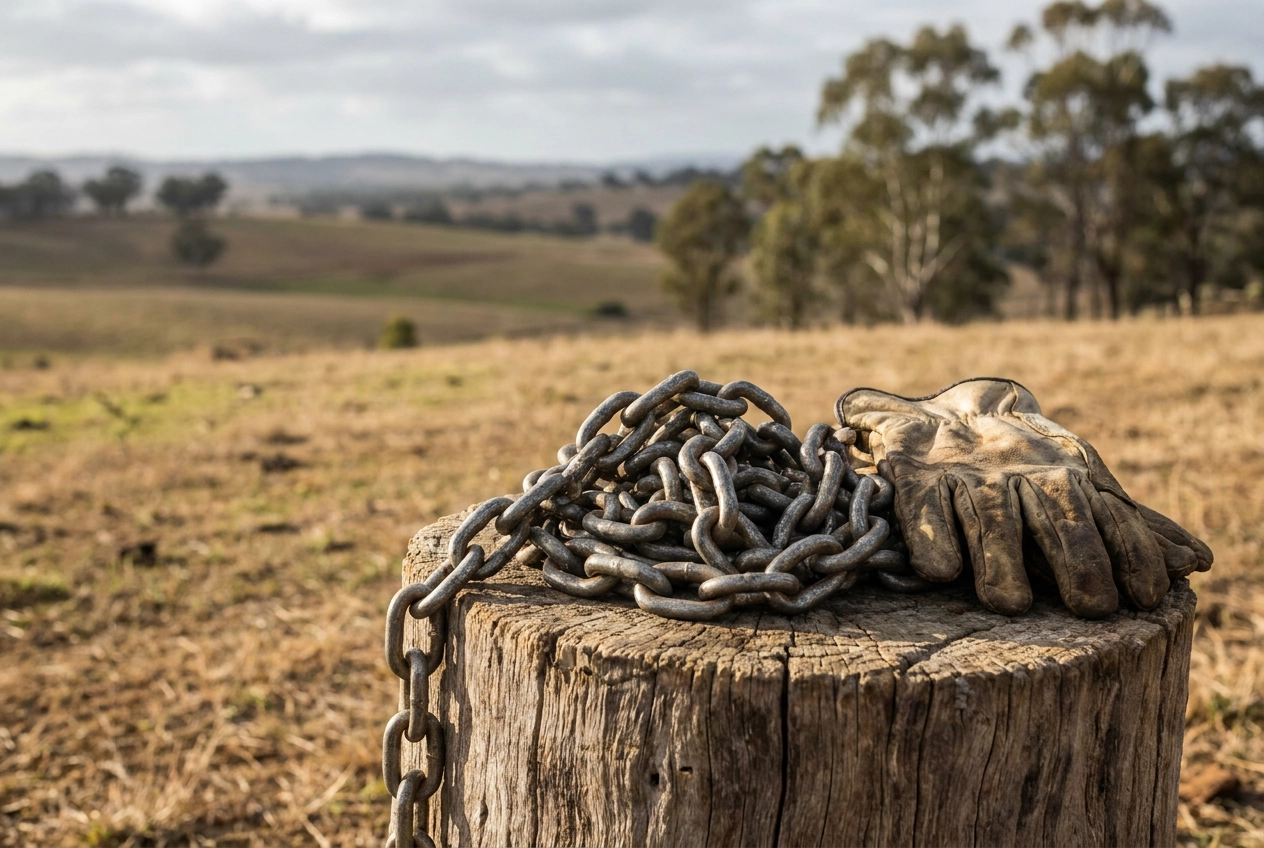
Getting a quote for land clearing in Central Victoria can feel like asking "how long is a piece of string?" One contractor prices your block at $8,000. Another comes in at $14,000. Both have looked at the same property. This kind of variation is not a mistake or a scam. It reflects the genuine complexity behind clearing land costs, and understanding that complexity is exactly what this post is designed to help you do.
Whether you are preparing a rural block for farming, building, grazing, or fire management, the price you pay will depend on far more than just the size of your property. Vegetation density, slope, equipment access, and debris disposal all push costs up or down in ways that are not always obvious before you start calling around for quotes.
This breakdown covers every major pricing variable relevant to Central Victoria conditions, walks through a realistic worked example, and gives you the tools to compare quotes fairly and budget with confidence. No price lists that do not apply to your situation. Just the honest variables that drive the numbers, explained clearly from the ground up.
Why Two Quotes on the Same Block Can Differ by Thousands
Land clearing costs in comparable markets range from $1,500 to $6,000 or more per acre. That spread is not the result of contractors guessing, or one operator gouging while another does favours. It reflects genuine differences in what each site actually demands.
Five variables consistently explain the gap: vegetation density, terrain and slope, equipment access, fuel load, and debris disposal method. When two quotes on the same block differ by thousands of dollars, the most common cause is that the two contractors assessed different conditions, not that one is simply cheaper.
This matters because a low quote that excludes stump removal, disposal, or difficult-access premiums is not actually a better price. It is an incomplete scope. For high fuel-load blocks where excavator clearing is the only practical method for reaching CFA standards in a single season, the method itself carries its own cost logic that a surface-level quote will not capture.
Established clearing companies conduct a site walkthrough before pricing any job, because no two rural blocks are identical. The sections that follow work through each variable so you can read any quote you receive with clear eyes.
Vegetation Density and Tree Size: The Biggest Pricing Variable
Of all the variables that move a clearing quote, what's actually growing on your block carries the most weight.
Light brush and scattered regrowth typically costs $1,200 to $2,500 per acre to clear. Heavy timber, dense scrub, or thick native undergrowth climbs to $3,500 to $6,000 or more per acre. That gap reflects genuine differences in machine hours, not contractor margin.
Tree size compounds this. Larger trees demand bigger equipment and more time per stem; contractors typically flag oversized stems as separate line items on a site walkthrough.
Central Victoria complicates matters further. Many rural blocks carry decades of accumulated undergrowth, native scrub, and mixed eucalyptus regrowth, routinely placing them in the medium-to-heavy range before a contractor arrives.
Fuel load is the less obvious factor. A block dense with dry combustible material can cost materially more to clear than a lightly vegetated neighbour of identical size, because processing volume directly determines machine hours. FireReady's Undergrowth & Fuel Load Clearing work is scoped with this in mind.
Selective clearing offers a practical way to manage costs: retaining established natives while removing understorey scrub reduces total volume cleared and supports environmental compliance, without stripping the property's vegetation character.
Terrain and Slope: How the Land Itself Affects Land Clearing Rates
Vegetation density tells one part of the pricing story. The shape of the land tells another.
Flat, accessible ground costs roughly 10 to 20 per cent less to clear than hilly, rocky, or steep terrain. On level sites, equipment moves freely between passes and operators maintain consistent output. On difficult ground, that efficiency disappears quickly.
Central Victoria's landscape complicates this in specific ways. Granite outcrops, undulating paddocks, and creek-line gullies are common across the region, and each creates genuine equipment challenges. Rocky ground may require additional passes or specialist attachments to clear effectively. Steep slopes can restrict which machines are safe to deploy at all; contractors select equipment based on manufacturer limits and site-specific conditions.
Seasonal ground conditions add a further layer. Winter and early spring leave parts of Central Victoria waterlogged, and boggy soil can prevent heavy machinery from accessing a site entirely until the ground firms. That delays scheduling and, in some cases, increases labour time once access becomes possible.
When a contractor quotes a hilly or rocky block higher than a comparable flat site, that difference reflects a measurable reduction in how much ground they can cover per hour. It is not margin padding; it is an accurate read of site conditions. Understanding this helps you interpret quotes on challenging terrain with confidence rather than suspicion.
Equipment Access: Why Remote or Awkward Sites Cost More
Terrain and slope affect how equipment moves on your block. Access determines whether the right equipment can get there at all, and the cost difference is significant.
Sites requiring equipment to travel long distances, cross soft ground, or navigate around obstacles typically attract a 10 to 30 per cent premium on base clearing rates. That uplift reflects genuine costs: longer transport time, additional setup, and sometimes a forced equipment substitution.
Narrow laneways, low-clearance powerlines, steep entry tracks, and shared access roads all restrict which machines a contractor can bring in. When a larger, faster machine cannot fit, a smaller and slower one must do the job instead, increasing hours on site and raising the total cost accordingly.
Rural blocks with no formed driveway, or with seasonal access issues after wet winters, may require basic site preparation before clearing can even begin. A pre-quote inspection should identify this upfront so it appears in the quote rather than arriving as a surprise variation.
Mobilisation fees (the cost of transporting equipment to your property) are sometimes itemised separately and sometimes folded into the per-acre rate. Always ask which approach a contractor uses before comparing land clearing company quotes, as the same total can look cheaper or dearer depending on how it is presented.
Location within Central Victoria also matters. Properties near Bendigo, Castlemaine, Kyneton, or Macedon generally incur lower mobilisation costs than isolated rural holdings further from contractor bases, simply because less travel time is involved.
Debris Disposal: The Hidden Cost That Surprises Most Property Owners
Even after access and terrain costs are settled, disposal catches many property owners off guard.
On-site mulching is the most cost-effective option. Forestry mulching runs $1,500 to $4,000 per acre; material is chipped in place, eliminating haulage and tipping fees entirely. If your block suits this method, it is almost always worth choosing.
Off-site haulage costs more. Off-site haulage costs more than on-site mulching; the exact premium depends on load volume, distance to the nearest facility, and current tipping rates in your area, ask your contractor to quote this as a separate line item.
Stump removal is the budget item most commonly missed. On a block carrying many stumps, stump grinding can add significantly to the total before any other work is priced. Ask your contractor to count stumps during the inspection and quote them separately.
Burn-off is not always available. In Central Victoria, open burning is subject to seasonal fire restrictions and CFA burning-off regulations. Permits are required, and restrictions can close this option entirely during high-risk periods. Confirm with your contractor which disposal methods are permitted before committing to a scope.
When comparing quotes, request line-item pricing for clearing, stump removal, and disposal as separate figures. Bundled totals make it impossible to judge whether you are comparing equivalent scopes.
Block Size and Volume: Bigger Jobs Unlock Better Rates
Beyond disposal method, total acreage is one of the most reliable levers for managing what you pay per unit of work.
Single-acre projects typically cost 20 to 27 per cent more per acre than multi-acre jobs. Mobilisation, equipment transport, and site setup cost roughly the same whether the job covers one acre or five. On a single-acre site those fixed costs concentrate into a smaller bill; on a five-acre job they spread out.
At five acres or more, volume discounts of 10 to 20 per cent become standard. Scoping the full job upfront rather than clearing in stages will almost always deliver a lower per-acre rate.
For smaller blocks, the per-acre framing largely disappears. Residential lots under one acre are commonly quoted as flat rates, typically between $500 and $3,500, with vegetation density the main variable. Contractors bundle labour, equipment time, and mobilisation into a single figure.
Bundling additional site preparation work, such as fire break construction, earthworks, or graded access tracks, can also reduce the effective cost per service. When equipment is already on site, adding a related task avoids a separate mobilisation charge entirely.
FireReady works across both small semi-rural blocks and larger rural properties throughout Central Victoria. Scoping accounts for the full project scope from the outset, so nothing is quoted piecemeal. View completed projects across the region to see the range of block types and clearing work the team has delivered.
Central Victoria Conditions: What Makes This Region Different
Central Victoria introduces cost drivers that do not apply in lower-risk rural markets.
Clearing here is governed by the Bushfire Management Overlay under Victoria's planning scheme, which ties clearing directly to defendable space requirements. Adequate clearance around structures is a safety obligation, not an aesthetic choice.
The region's vegetation compounds costs. Dry sclerophyll forest, stringybark, box ironbark scrub, and native grassland carry denser, more combustible fuel loads than many comparable rural markets, pushing local clearing costs toward the higher end of benchmarks discussed earlier.
Timing affects cost and feasibility. Late autumn through winter is the practical window: fire restrictions are minimal and firmer ground allows heavy equipment to operate without bogging. Working outside this window may restrict available methods or trigger permit requirements that add time and cost.
Environmental overlays and vegetation protection orders apply to some parcels across the region. Clearing without checking these first is a planning offence under the Planning and Environment Act 1987. A reputable local land clearing company will identify these constraints at inspection before work begins.
Property owners should treat clearing as one component of a broader programme. Understanding what bushfire property preparation involves for Central Victoria properties helps frame clearing alongside fire break creation, defendable space assessment, and structural protection. FireReady, based in Central Victoria, delivers this full scope, including exterior bushfire sprinkler systems, as an integrated service.
A Worked Example: What a Typical 2-Acre Semi-Rural Block Might Cost
To put those variables into practice, consider this scenario: a 2-acre semi-rural block in Central Victoria with moderate slope, medium-density scrub and undergrowth (no large timber), reasonable vehicle access via a formed track, and on-site mulching as the disposal method.
At medium clearing rates of roughly $2,000 to $3,500 per acre, the base cost for 2 acres sits in the range of $4,000 to $7,000 before any add-ons.
Apply a 10 to 20 per cent adjustment for moderate slope and that range shifts to approximately $4,400 to $8,400.
Add 10 stumps requiring grinding, and stump work contributes a further $2,000 to $3,500. The realistic all-in budget for this scenario lands at $6,400 to $11,900.
Cost Component | Low Estimate | High Estimate |
|---|---|---|
Base clearing (2 acres, medium density) | $4,000 | $7,000 |
Slope adjustment (10–20%) | $400 | $1,400 |
Stump grinding (10 stumps) | $2,000 | $3,500 |
Total | $6,400 | $11,900 |
This is an illustrative framework, not a quote. Every figure above can shift based on what a contractor finds during a site inspection. Use this range as a defensible starting point when reviewing proposals, not as a substitute for having someone walk your block.
How to Get an Accurate Quote and Compare Clearing Land Costs Fairly
That worked example gives you a framework for understanding cost. Turning it into an accurate quote requires a different approach.
Never accept a remote quote. Reputable contractors will not price clearing work without walking your block first, because vegetation density, slope, and access all vary too much to assess from satellite imagery or a phone call.
When you receive quotes, ask each contractor to itemise clearing, stump removal, and disposal as separate line items. This is the only way to confirm you are comparing equivalent scopes rather than guessing why one quote is $3,000 cheaper than another.
Confirm the billing structure before you sign anything. Quotes may be per acre, per hour, or a fixed project price. Hourly rates for labour-intensive clearing typically range from $120 to $265 per hour, and knowing the structure helps you assess your exposure if conditions slow the job down.
Ask specifically whether mobilisation is included or invoiced separately. Also check whether the contractor has direct experience with fire preparation clearing. A defensible space cleared by someone who understands fuel load and CFA buffer requirements produces a materially better fire safety outcome than one cleared for aesthetics alone.
FireReady provides on-site assessments for Central Victoria properties and scopes clearing work within the context of broader fire preparation. If you are ready to move forward, visit our property maintenance page to arrange a walkthrough before the next fire season window opens.
Realistic Budgets Start with the Right Questions
As covered above, five variables explain virtually every meaningful price difference between quotes on comparable Central Victoria blocks. The region's fuel loads and bushfire risk context push costs toward the higher end of national benchmarks, and seasonal access windows mean timing your project is part of the budget decision, not an afterthought.
The worked example above produces an all-in budget of $6,400 to $11,900 including stump grinding. That range is a starting point for evaluation, not a substitute for a site-specific quote.
Per-acre averages have limited use on their own. Two blocks of identical size can carry completely different fuel loads, terrain complexity, and access constraints.
FireReady, local to Hepburn Shire and Central Victoria, offers site inspections and clearing scoped to defendable space requirements. Reach out before the autumn window closes; once seasonal fire restrictions tighten, your options narrow.
Conclusion
If your Central Victoria property needs clearing before fire season, do not wait for the autumn window to close. Contact FireReady for a site inspection scoped to defendable space requirements and take control of your property's fire preparedness today.